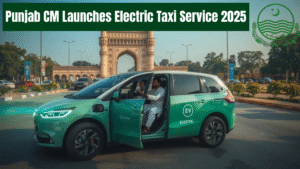
Many citizens wonder: “What changes with Punjab CM Launches Electric Taxi Service 2025?” In short: a bold shift toward eco-friendly transport with subsidies, interest-free installments, and empowerment for drivers. This article dives deep into the policy, how it works, who qualifies, and what impact it will have on Punjab’s transportation landscape. The program aims to transform public transport by replacing conventional taxis with electric vehicles, thereby cutting emissions and modernizing the taxi sector. It is part of Punjab’s Transport 2030 Vision, emphasizing sustainable mobility, job creation, and green infrastructure. In its first phase, about 1,100 electric taxis will be introduced, with a portion reserved for individual drivers and a special quota for women. The government covers interest costs on loans, making installment plans interest-free for applicants. The scheme includes subsidized down payments: the government will contribute to a portion of the down payment for buyers. For vehicles priced between Rs. 4 million and Rs. 10 million, the government may pay a significant amount on behalf of the buyer. Some 18 charging stations are already established in Lahore, with plans to expand the charging network across Punjab to support the taxis. The plan designates 30 e-taxis solely for women drivers to encourage female participation. Basic Requirements: Must be a resident of Punjab with valid identification. Must hold a valid driving license. Should be financially sound (clean financial record). Must provide vehicle ownership documentation or financing eligibility documents. Some vehicles are allocated for fleet owners while others are for individual drivers. Reserved quotas for women drivers to ensure inclusivity and encourage female participation. Applicants failing to meet financial or document verification. Lack of creditworthiness or poor financial history. Inability to comply with scheme rules or defaulting on installments. Announcement & Registration Phase: The government opens applications via a designated platform or department. Applicants submit personal, license, and financial documents. Authorities validate identity, registrations, and financial eligibility. Approved applicants receive notice of subsidized down payment and installment terms. Government handles interest costs, registration, and token tax on behalf of the driver. Selected vehicles (qualified models) are procured, then delivered to successful applicants. Charging infrastructure and support services are aligned. Vehicles go into service with GPS, smart meters, and tracking systems. Scheme performance, default rates, and route management are monitored by transport authorities. Vehicle Financing & Down Payment: Government subsidizes part of the down payment so applicants pay less upfront. Remainder is financed by banks under interest-free arrangements, with the government absorbing interest. Initial charging stations (at least 18 in Lahore) are already operational, with plans to expand province-wide. Ongoing expansion of EV charging network is key to success. Electric taxis drastically reduce fuel costs compared to petrol/diesel. Maintenance costs are typically lower (no fuel engine, fewer moving parts). A multi-billion rupee fund has been earmarked for the initial scheme rollout. Government covers registration fees, token taxes, and in some cases interest subsidies. Green & Clean Environment: Reduced carbon emissions, lower air pollution in cities. Economic Opportunity: Empowerment for drivers, especially youth and women, through ownership. Cost Savings: Lower running costs lead to increased earnings for drivers. Modernization: Transparent fares, GPS & smart meters, less corruption in taxi services. Infrastructure Growth: Stimulates investment in EV charging networks and related industries. Charging Network Gaps: Limited charging stations may restrict range or service areas. Battery Technology & Replacement: Long-term battery health and replacement costs are uncertain. Uptake & Awareness: Many drivers may hesitate due to lack of information about EVs. Default Risks: Some applicants might default on payments; risk management is vital. The scheme is set to roll out with 1,100 e-taxis in the first phase. Over 60,000 applications have reportedly been submitted even before formal launch. The government has shortlisted multiple vehicle suppliers, including locally assembled EV models with 200–300 km range. Charging stations are being deployed at frequent intervals in Lahore, with plans to scale across Punjab. Fiscal support includes allocation of billions for subsidies and interest coverage. Punjab residents with valid driving licenses, acceptable financial records, and fulfilling the application criteria can apply. The government subsidizes part of the down payment, and covers registration & interest costs for buyers. Yes — a reserved quota (e.g. 30 vehicles) is specially allocated for women under this scheme. Initial stations exist in Lahore, and the government plans to expand charging infrastructure across the province to support operations. Risks include limited charging infrastructure, battery replacement costs, default on payments, and need for robust maintenance support. “Punjab CM Launches Electric Taxi Service 2025” is more than a transportation program — it’s a transformative leap toward clean cities, empowered drivers, and modern mobility. With strategic subsidies, infrastructure push, and inclusive quotas, this scheme has the potential to reshape how we travel in Punjab.